New Tashkent Architectural Guidelines. Part 5: Materials


OVERVIEW
In our previous New Tashkent Architectural Guidelines post, we focused on Openings, which are essential not only for providing light, ventilation, access, views, and movement within a building, but also for establishing a strong connection between individual buildings and their surrounding environment.
In this final post, we turn our attention to Materials—a fundamental component in shaping the “look and feel” of any city and instrumental in creating a distinctive, authentic sense of place. Aligned with our principle of envisioning New Tashkent as a “natural extension” of the existing city, the Materials Guideline plays a critical role in achieving an attractive and cohesive urban landscape—both now and into the future.
MATERIALS. SUSTAINABLE, DURABLE, AND LOCAL
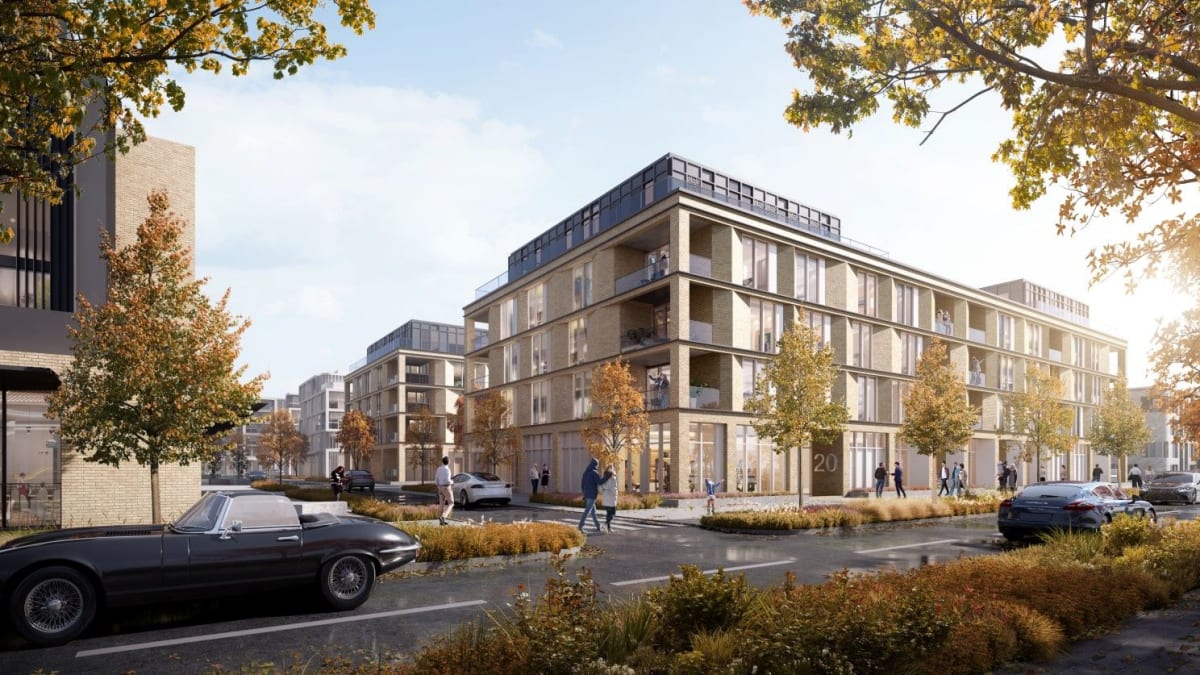
Sustainability, durability, and robustness must be top priorities in material selection. Temporary or flimsy elements should be avoided in favour of materials that are easy to maintain, repair, and replace. A restrained palette of primary materials is recommended to ensure visual harmony. Where a more diverse selection is proposed, the materials should blend seamlessly with the surrounding landscape and respond to the local architectural character. Secondary materials such as timber, metal, ceramics, polished concrete, glass, plaster, and stucco may also be used—applied sparingly to highlight specific architectural elements or provide subtle accentuation.

For residential buildings, the guidelines recommend robust, enduring materials such as natural stone and brick to ensure long-lasting, thoughtful architecture. Their deep roots in Uzbek vernacular design reinforce local identity and create a strong sense of place. Moreover, promoting the use of locally sourced brick not only supports tradition but also contributes to strengthening the local economy.
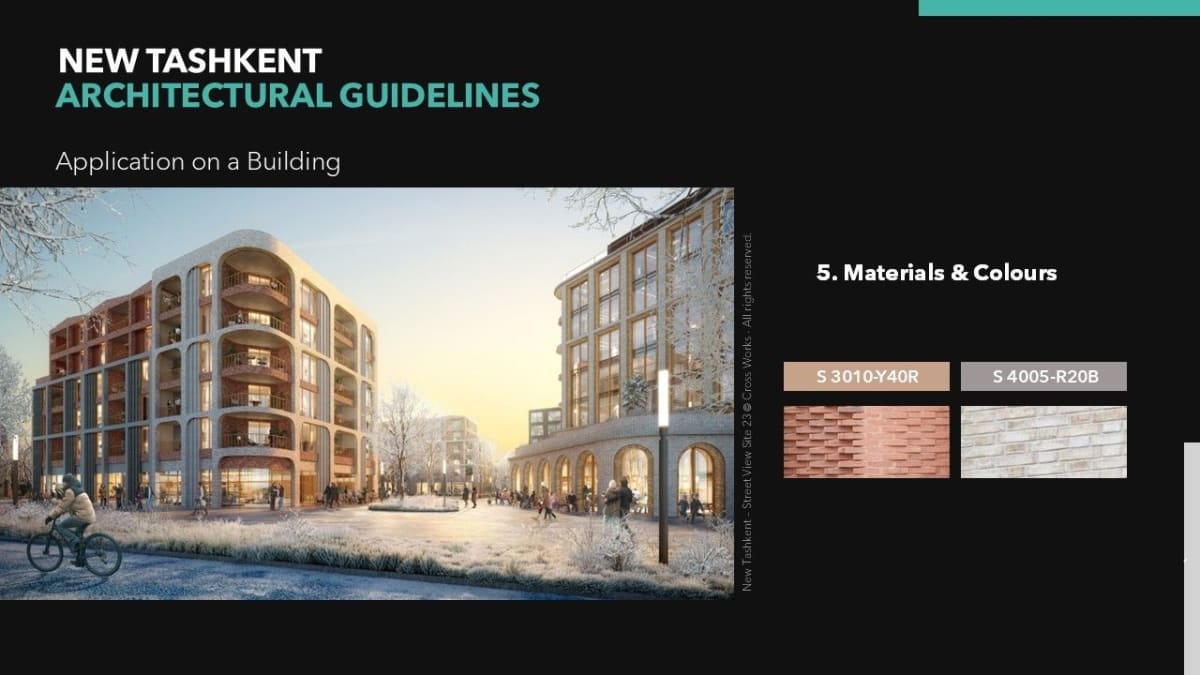
In Cultural and Civic zones, buildings may be set apart using materials like natural stone, polished concrete, clay, and metal to reflect their special civic function and help define distinctive sub-districts within the broader New Tashkent context. For key commercial plots—particularly at prominent junctions—unique material palettes are encouraged to reflect their central role in working, shopping, and entertainment within the city.
As a prominent characteristic of Uzbekistan’s historic architecture, the application of Patterns and Textures to material surfaces offers an opportunity to celebrate local craftsmanship and identity. When thoughtfully applied, such details can enhance the primary building materials without overwhelming them. These patterns may be integrated into doors, screens, and façade elements to extend this rich design language into the fabric of New Tashkent.
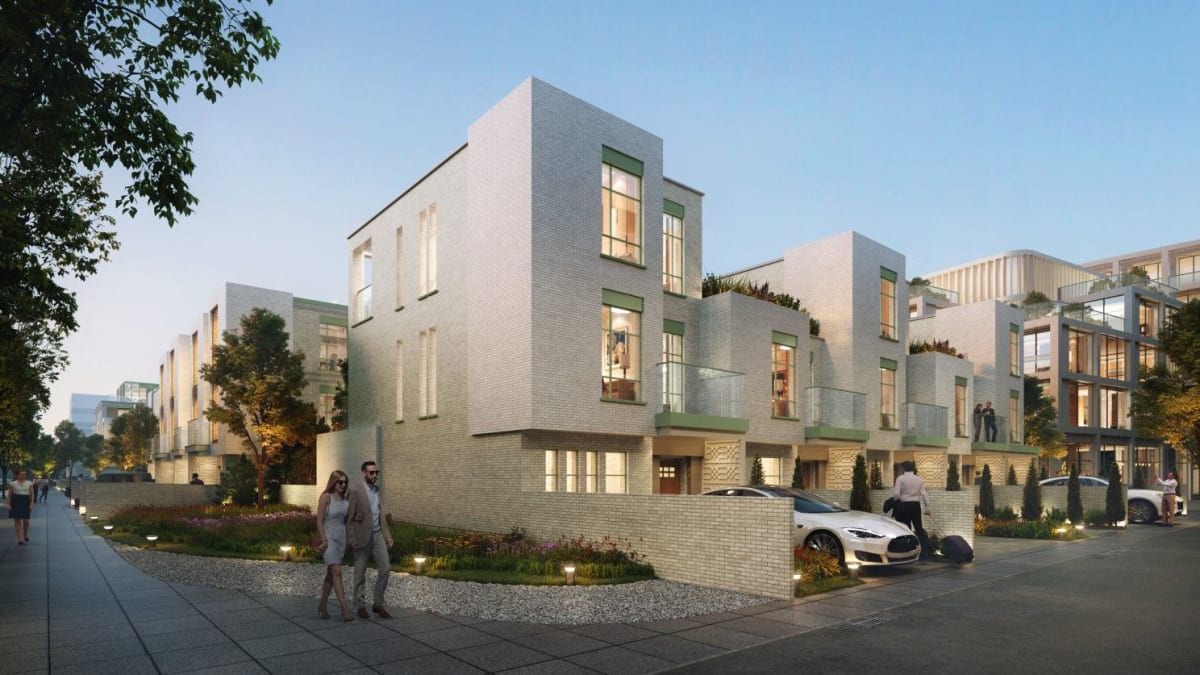
To support climate-responsive design, the careful selection of materials is essential. Non-reflective surfaces and integrated shading elements should be prioritised to reduce solar heat gain, minimise glare, and improve energy efficiency across the development.
Given that materials significantly influence the visual presence of architecture, the external colour palette must also be selected with great care. To maintain coherence with the existing urban fabric of Tashkent, the guidelines advocate for a palette grounded in sandy and earthy tones, complemented by subtle greens and blues. A generous use of white is especially important to mitigate façade overheating and support thermal comfort.

Ultimately, materials will play a defining role in shaping the tactile experience and lasting memories of future residents and visitors to New Tashkent. They must be robust, sustainable, and durable — rooted in place, yet resilient for the future.